SPECIES INFO
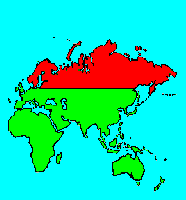
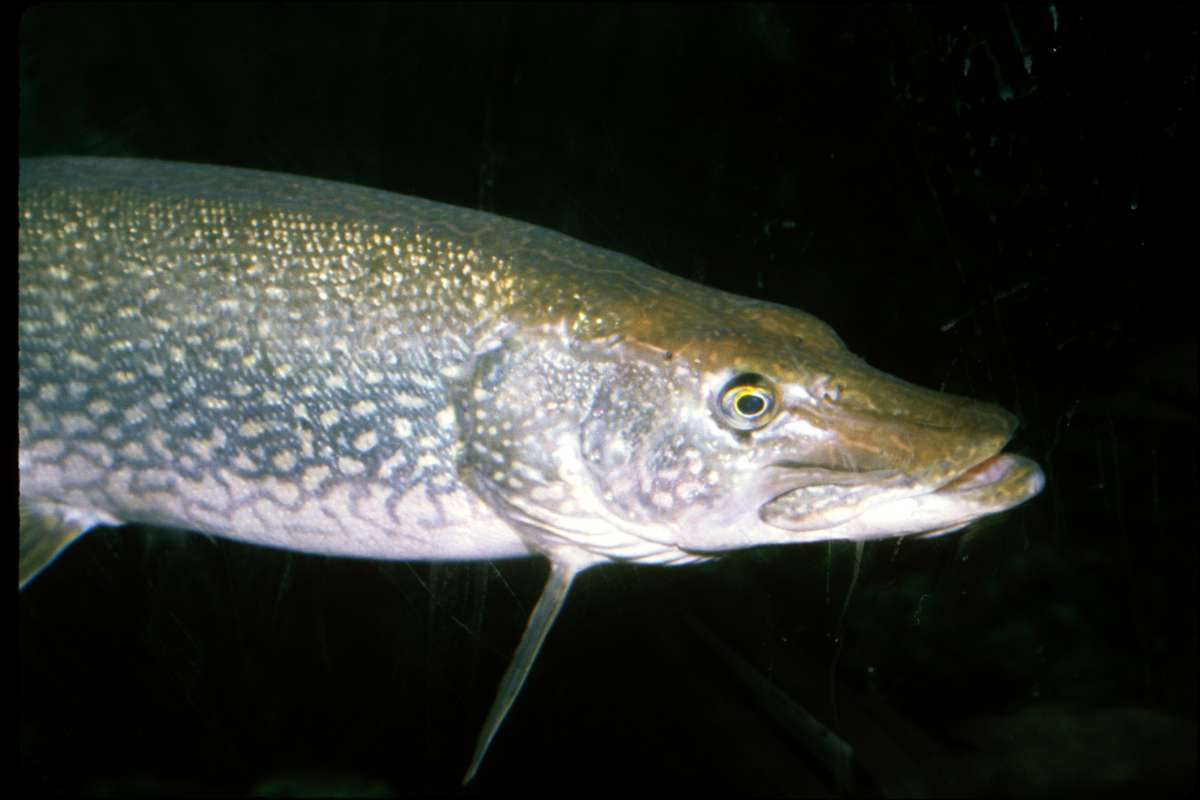
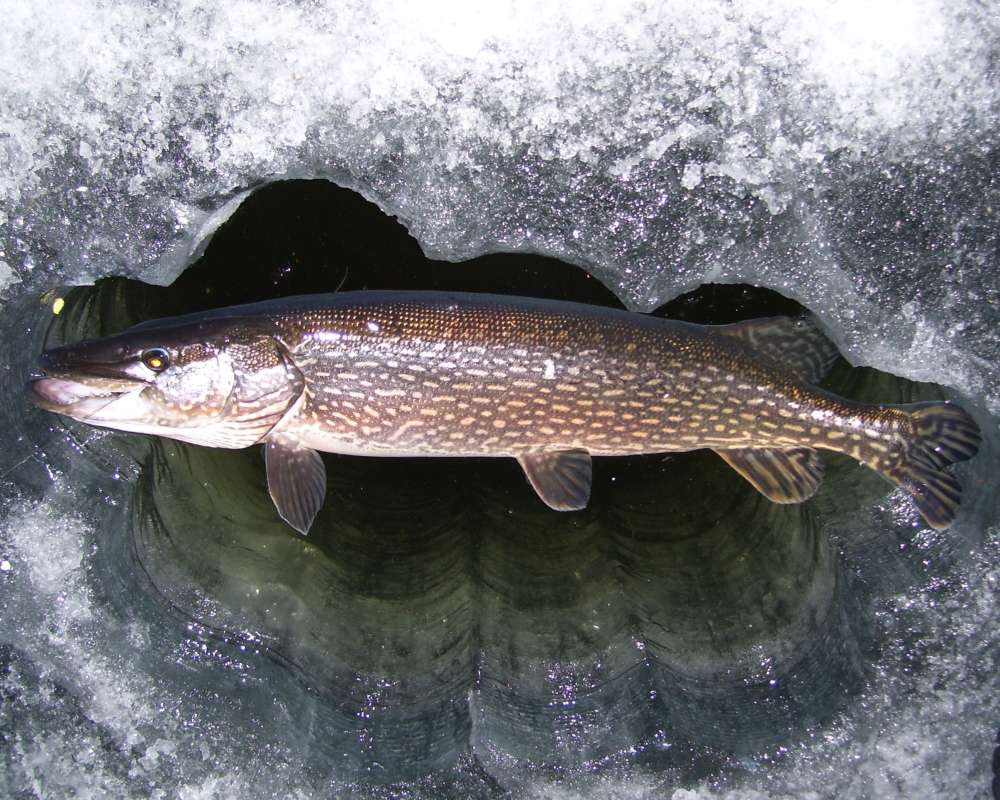
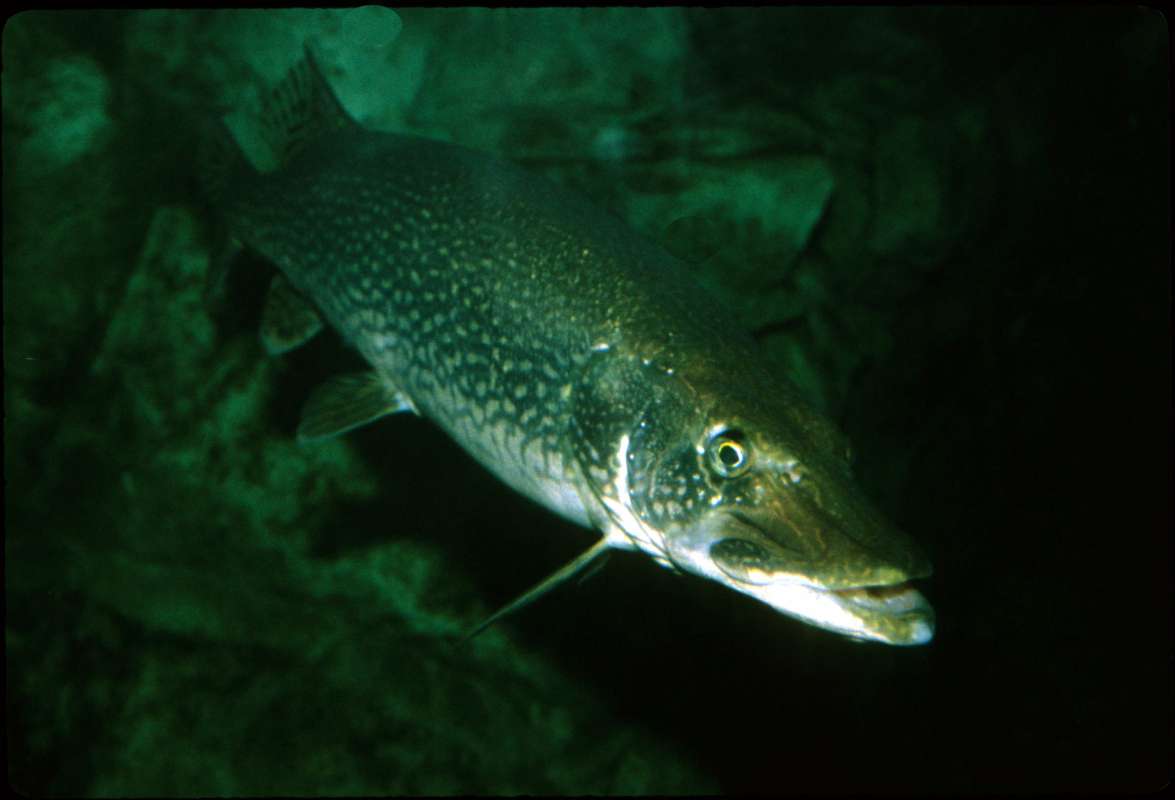
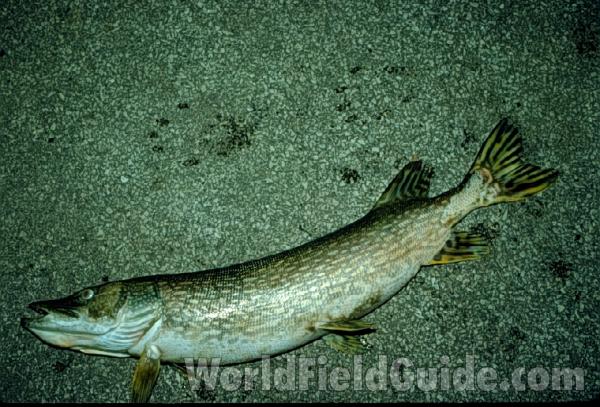
Northern Pike (Esox lucius) is one of the most popular sporting fish in the world. It is found both in North America and in Europe. It is found through almost all of Canada and Alaska and on into Eurasia. It is found as far south as central Missouri but is not found in the deep south of the United States. In Europe the pike is found almost everywhere except for the Iberian and Italian areas. This fish is usually spotted with light colored spots.
These game fish are great fighters and can reach very large sizes. Examples measuring thirty inches and weighing fifteen pounds are frequently caught with a hook and line. Records for this species are usually over forty inches and twenty pounds. Although some anglers think this is a good eating fish, many people feel that the large number of small bones in the meat are just too much of a problem so the fish is frequently not eaten when caught.
Pflieger noted in his book on Missouri fishes in 1975 that the northern pike was rare in Missouri and only found north of the Missouri River which was the southern boundary of its natural North American range. However, he noted that recent stocking activities have increased its range.
Sigler in his book on Utah fishes notes this fish is not common in Utah, but their large size and fighting ability make them locally popular as a game fish.Pike genus (Esox) was originally native to the Northern Hemisphere, but has been introduced on a wider scale. There are four natural species found in North America: grass pickerel, chain pickerel, musky, and northern pike. There are also some man-made hybrids that have been stocked in selected lakes. The amur pike (Esox reicherti) is found in northeastern Asia.
An interesting case of convergent evolution occurs between the barracudas of the marine oceans and the various freshwater pikes. The elongate shape and eating habits of these two groups are similar. However, the pikes are a group of very primitive fish in their own order. The barracudas belong in the perch order of advanced fish.
Pikes, Family Esocidae, are a small family of only five species found in the Northern Hemisphere. They are found only in freshwater. They are characterized by having a long narrow appearance, with a large wide mouth and usually a flattened head. The rays in the fins are not bony.
Salmon Group, Order Salmoniformes, is found worldwide in oceans. It is also found in freshwater in many places in North America. A great number of the large game and sport fish are found in this order.
Bony fish, Class Teleostomi, are a class of chordates that include the majority of fish-like animals found on earth. They are characterized by a bony jaw and a bony skeleton. They are found in both fresh and marine waters.
Backboned Animals (Phylum Chordata) are the most advanced group of animals on earth. These animals are characterized by having a spinal cord or backbone. Most members have a clearly defined brain that controls the organism through a spinal cord. Fish, amphibians, reptiles, birds, and mammals are in this phylum.
Currently, some taxonomists believe that the fish should be divided into two groups (sharks and regular fishes) and that there are some other primitive groups in the phylum such as hagfish or lampreys.
Animal Kingdom contains numerous organisms that feed on other animals or plants. Included in the animal kingdom are the lower marine invertebrates such as sponges and corals, the jointed legged animals such as insects and spiders, and the backboned animals such as fish, amphibians, reptiles, birds, and mammals.