SPECIES INFO
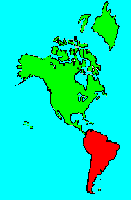
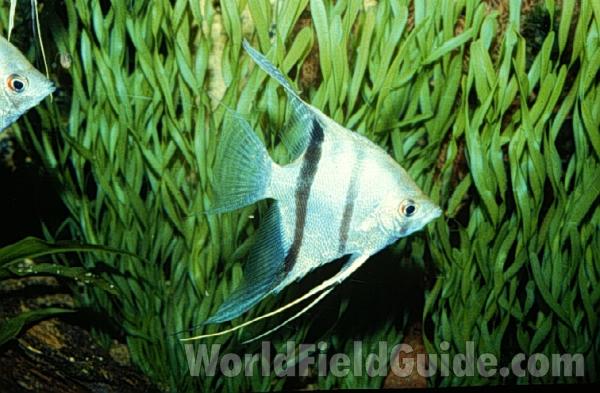
Aquarium fresh water angel fish (Pterophyllum scalare) is one of the most popular aquarium fishes in the world. Axelrod and Burgess in their 1985 edition atlas on freshwater aquarium fish estimate that 25 million individuals are bred each year in Hong Kong and Singapore for export to Europe and the Americas. There are dozens of domestic varieties to this species. This species is nearly impossible to breed when captured from the wild. However, for those lucky enough to breed wild specimens, it has been found that the next domestic generation is somewhat less than impossible to breed.The freshwater angel fish genus (Pterophyllum) is native to South America primarily from the Amazon Valley. Axelrod and Burgess in their atlas of freshwater aquarium fish observe that there are only three natural wild lifeforms in this genus: Pterophyllum dumerilii, Pterophyllum scalare scalare, and Pterophyllum scalare saltum. These wild forms can reach about 6 inches in length.
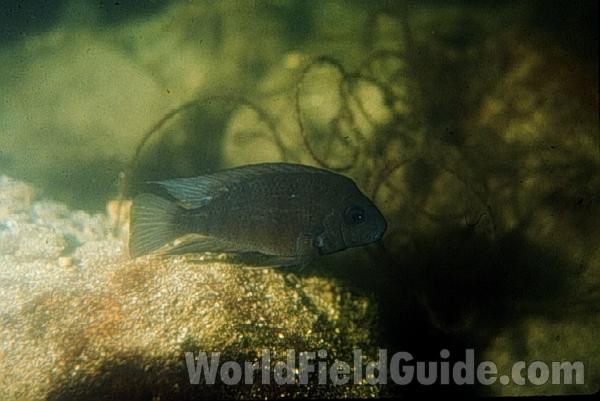
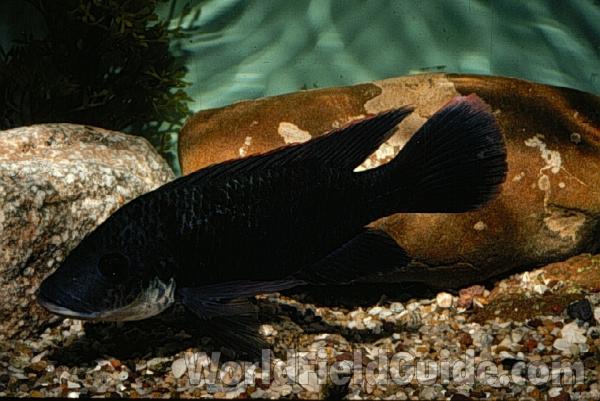
South American Cichlids have been separated from the African Cichlids to facilitate study of this large family. Many popular freshwater aquarium fish such as the Severum, Discus, Oscar, and Angel Fish are included in the South American Cichlids.
Cichlidae group of African and South American freshwater fish are a favorite with tropical fish fanciers because of their many nice colors. This is a very large family with numerous species.
To facilitate study of this family, we have divided the Cichlidae into sections based on the geographical origin of the species. This helps somewhat, but one must remember that quite a few of the species have been introduced beyond their native continents.
Perch-like Fish, Order Perciformes, are the largest order of fish in both freshwater and shallow saltwater. Most of the conventional fish belong to this order. The bass, bluegills, perch and crappies of freshwater plus the groupers and sea bass of salt water belong to this order. The fish all have spiny rays in their fins and the tail fin has seventeen rays. There are approximately 150 families. Herein, we have placed the families in alphabetical sequence within this order. (In some instances the typical taxonomic sequence of families is not much help. Consider, for example, that the barracudas are usually placed between the mullets and the threadfins.)
Bony fish, Class Teleostomi, are a class of chordates that include the majority of fish-like animals found on earth. They are characterized by a bony jaw and a bony skeleton. They are found in both fresh and marine waters.
Backboned Animals (Phylum Chordata) are the most advanced group of animals on earth. These animals are characterized by having a spinal cord or backbone. Most members have a clearly defined brain that controls the organism through a spinal cord. Fish, amphibians, reptiles, birds, and mammals are in this phylum.
Currently, some taxonomists believe that the fish should be divided into two groups (sharks and regular fishes) and that there are some other primitive groups in the phylum such as hagfish or lampreys.
Animal Kingdom contains numerous organisms that feed on other animals or plants. Included in the animal kingdom are the lower marine invertebrates such as sponges and corals, the jointed legged animals such as insects and spiders, and the backboned animals such as fish, amphibians, reptiles, birds, and mammals.