SPECIES INFO
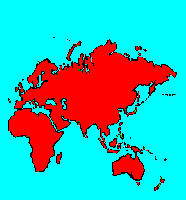
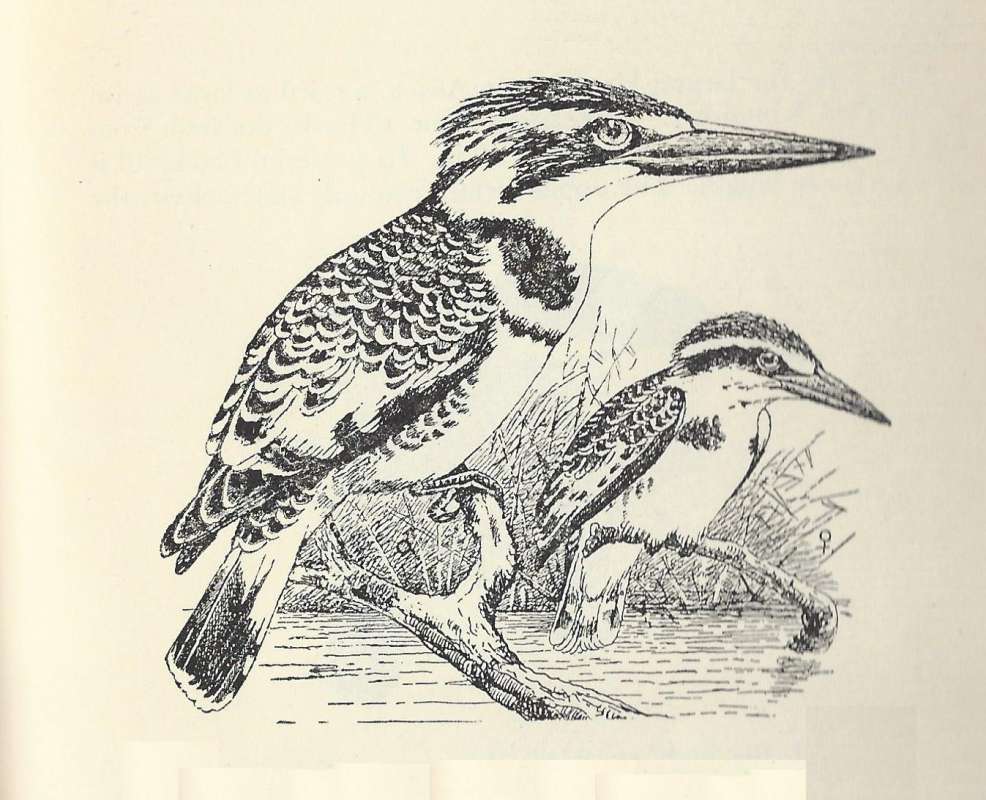
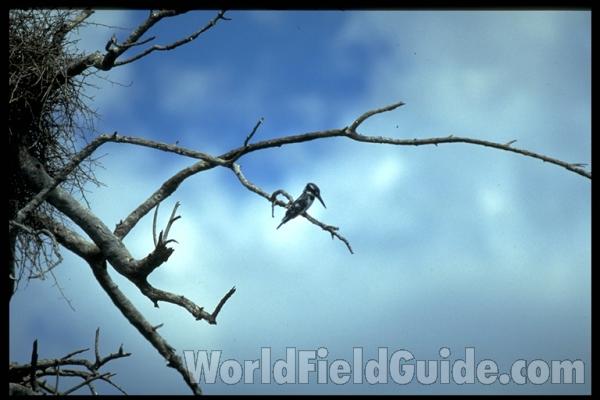
Pied Kingfisher (Ceryle rudis) is found widely and commonly south of the Sahara Desert in most of Africa. This kingfisher is also found from the Middle East to China. This is also found widely in India. This is known to breed in Nepal (ssp leucomelanura). The white breast, white throat, black breast band, and black band through the eye will help identify this nine to ten inch species.
There are 5 recognized subspecies for this lifeform. The nominate form, Ceryle rudis rudis, is found widely in sub Saharan Africa, but this is also seen in Egypt. The subspecies syriacus is found in the Near East to southwestern Iran. The subspecies leucomelanurus is found from eastern Afghanistan east into much of India and further east in southern China and also south east Asia. The subspecies travancorrensis is found locally in southwestern India. The subspecies insignis is found in south eastern China west to Hainan.The Cerylidae group of kingfishers contains 9 species. Most of these are medium to larger birds. This group is found in Africa, the New World, and warmer areas in southern Asia. The genus Ceryle has been divided into two genera: Ceryle(Old World with 1 species) and Meaceryle(Old and New World with 4 species). The Chloroceryle genus is found only in the New World with 4 species.
Kingfishers (Family Alcedinidae) are a family of 84 species of birds that are found virtually worldwide. They generally have long bills. Many species dive into the water for their food. (Modern authors divide this family into three families: Alcedinidae, Halyconidae, and Cerylidae.)
Hornbills, rollers, and kingfishers (Order Coraciformes) are characterized by having their three front toes joined for a portion of their length. There are seven families in this order.
Aves contains about 8,650 different species of living birds known to science. Each year about one new species is discovered in some remote rain forest or remote island. In addition, scientists have been raising many subspecies to full species status which may raise the species count to 10,000. Birdlife recognizes 10,027 species as of 2011.
However, each year about one species goes extinct. The rate of extinction is increasing, and the rate of new discovery is decreasing, so that the number of bird species will soon begin to decline rapidly. Although different taxonomists would organize the birds differently, there are approximately twenty-seven orders of birds. These orders are broken down into about one hundred and fifty-five different families.
Recent research of the genetic structure of some of the shore birds and owls would indicate that the present organization of orders and families should have some modification.
The birds are a worldwide group of animals that are characterized by having the front limbs modified into wings that are used for flying. Perhaps the most unique feature of the birds is the feathers. These feathers are made up of a central support called a quill and a series of small filaments that are hooked together as barbs.
For many years it was believed that Archaeopteryx discovered in Bavaria was the oldest bird from about 150 million years ago. However, in l986, Sankar Chattterjee, a Texas paleontologist, reportedly discovered a bird in the genus Protoavis that lived about 225 million years ago.
When this project was begun in 1978, we used Austin & Singer for bird taxonomy. Since then, we have adopted many changes, but have kept some older concepts that are still found widely in the literature. Recently, we have used Clements and Howard & Moore. Very recently, we have used Monroe and Sibley for the higher taxonomy of the perching birds.
Backboned Animals (Phylum Chordata) are the most advanced group of animals on earth. These animals are characterized by having a spinal cord or backbone. Most members have a clearly defined brain that controls the organism through a spinal cord. Fish, amphibians, reptiles, birds, and mammals are in this phylum.
Currently, some taxonomists believe that the fish should be divided into two groups (sharks and regular fishes) and that there are some other primitive groups in the phylum such as hagfish or lampreys.
Animal Kingdom contains numerous organisms that feed on other animals or plants. Included in the animal kingdom are the lower marine invertebrates such as sponges and corals, the jointed legged animals such as insects and spiders, and the backboned animals such as fish, amphibians, reptiles, birds, and mammals.