SPECIES INFO
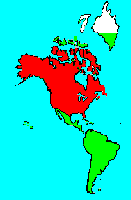
Water Moss (Fontinalis antipyretica) is found from Alaska south to New Mexico and California and then east to New York. It was believed that this moss stuffed in building cracks will prevent fires.Typical Mosses (Bryidae) contain the majority of moss species that one finds in North America.
True Mosses (Bryopsida = Musci) are generally a branched network of green thread-like structures laying close to the earth with a root-like rhizoid that penetrates into the ground. Upright green shoots involved in the reproductive process are occasionally present. They are typically divided into three different groups as follows: The Sphagnum Mosses (Sphagnales), the Andreaeidae, and the Typical Mosses (Bryidae).
Mosses and Liverworts (Bryophyta Phylum) are normally divided into three different groups: Hornworts (Anthocerotae), True Mosses (Bryopsida or Musci), and the Liverworts (Hepaticae).
Plant kingdom contains a large variety of different organisms including mosses, ferns, and seed plants. Most plants manufacture their energy from sunlight and water. Identification of many species is difficult in that most individual plants have characteristics that have variables based on soil moisture, soil chemistry, and sunlight.
Because of the difficulty in learning and identifying different plant groups, specialists have emerged that study only a limited group of plants. These specialists revise the taxonomy and give us detailed descriptions and ranges of the various species. Their results are published in technical journals and written with highly specialized words that apply to a specific group.
On the other hand, there are the nature publishers. These people and companies undertake the challenging task of trying to provide easy to use pictures and descriptions to identify those species.