SPECIES INFO
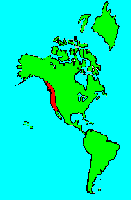
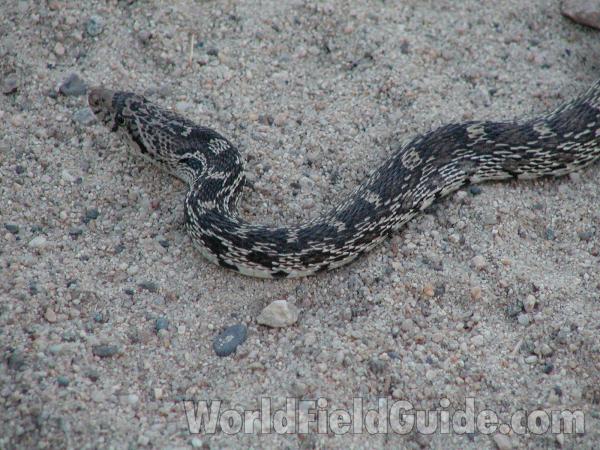
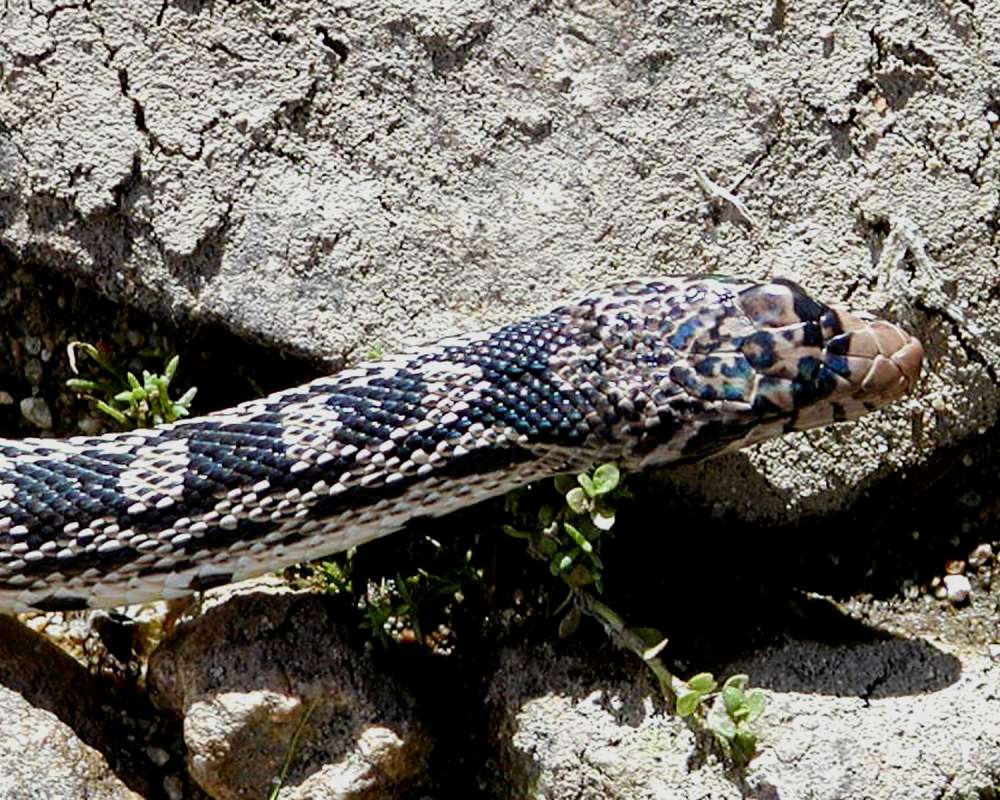
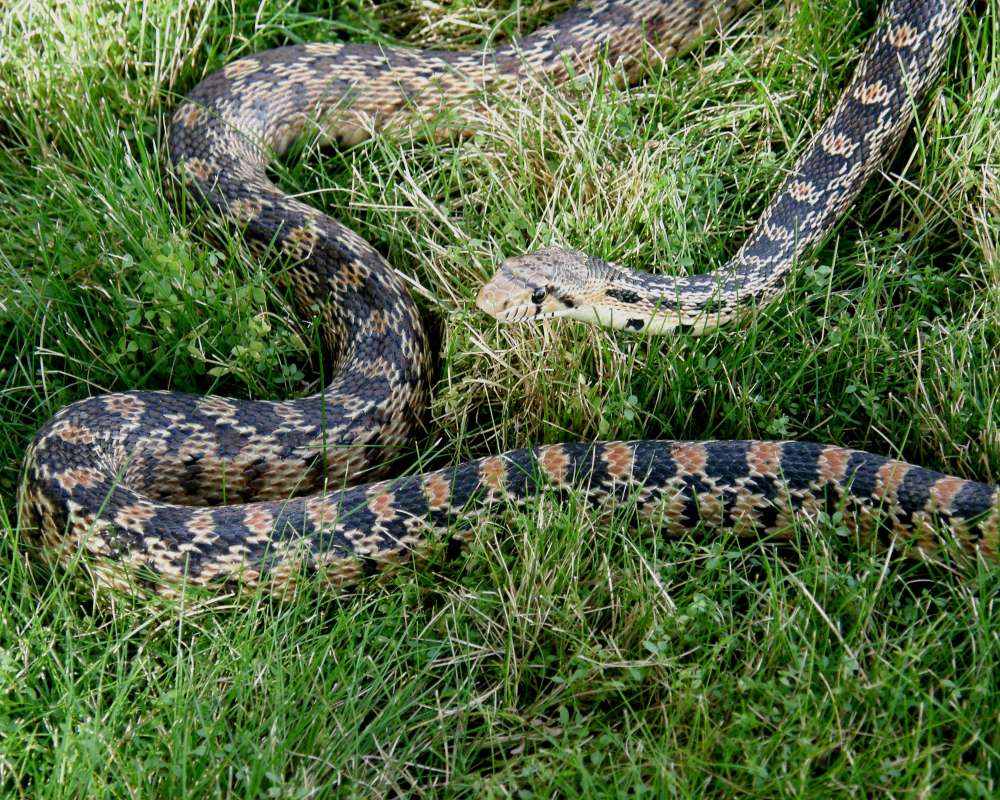
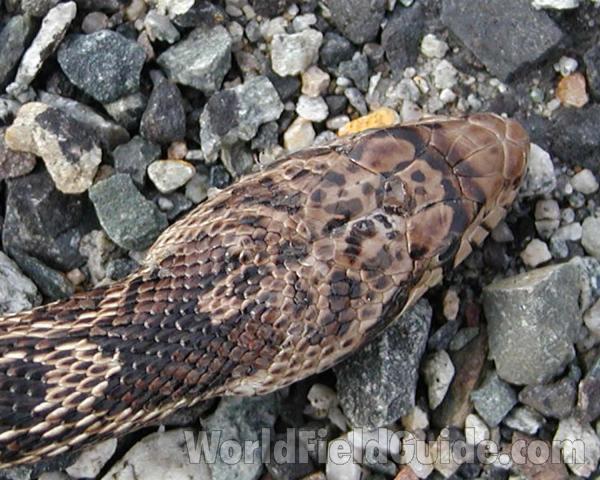
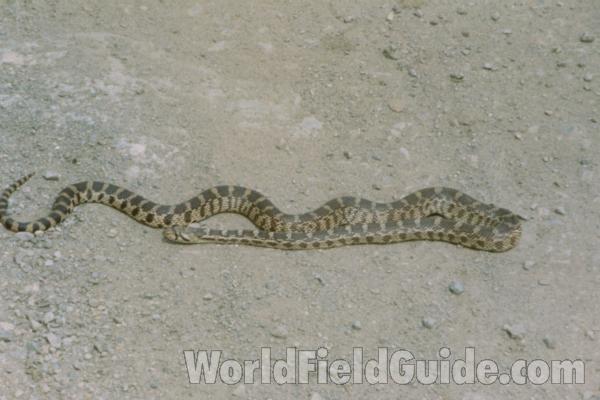
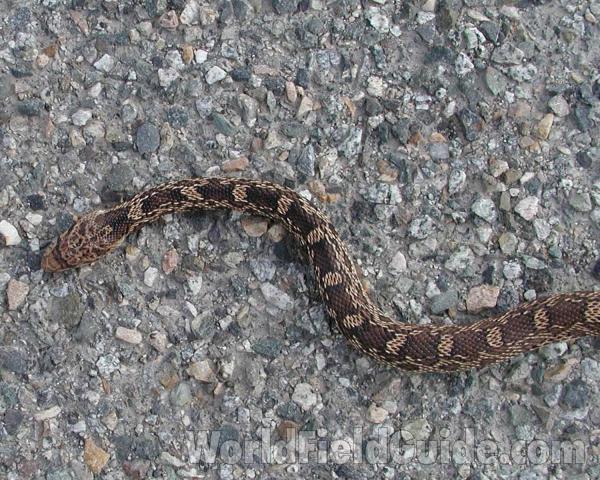
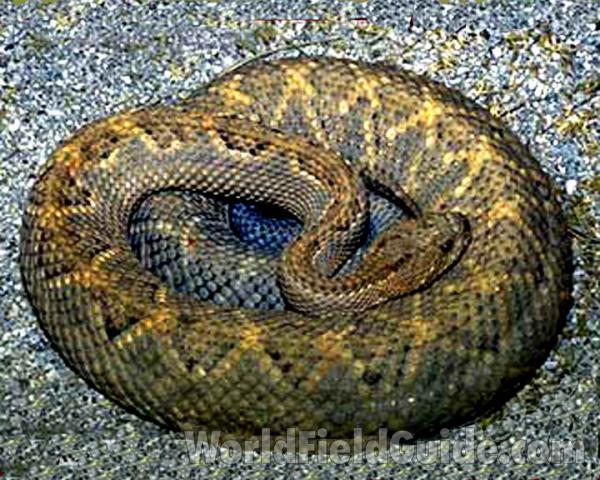
Pacific Gopher Snake (Pituophis catenifer) is a subspecies of P. melanoleucus. It is found from the northern half of California to Washington state. The closely related Great Basin gopher snake (Pituophis melanifer deserticola) is found from eastern California, northern Arizona, northern New Mexico, and Nevada and Utah north to British Columbia.Pituophis genus (gopher, pine, and bull snakes) are native to the northern New World from Central America north into North America. There are five species in the genus. Only four species are in the genus if P. ruthveni of Louisiana is treated as a subspecies of P. melanoleucus.
Family Colubridae contains the vast majority (70% of all snakes) of the world's species of snakes. The number is estimated to be over 1,850 and possibly up to 2,500.
Lizards and Snakes (Squamata Order) share many common characteristics and consequently they are grouped in a single order. There are greater differences between some groups of lizards than there are between other groups of lizards and snakes. The same is true of snakes. Lizards and snakes share a common skull shape.
There are perhaps 4,000 species of lizards and perhaps 2,700 species of snakes alive today. In the Great Big Book of Snakes and Reptiles published in 2014, they noted the above estimates.
Reptiles (Class Reptilia) are an ancient group of scaled chordates. These scales may be permanently joined, as in the turtles, or flexible, as in the snakes. Reptiles are land-based. Their eggs are laid on land and the young are air breathing.
In the Great Big Book of Snakes and Reptiles published in 2014, they noted that there are more than 7,000 species of reptiles alive today.
Backboned Animals (Phylum Chordata) are the most advanced group of animals on earth. These animals are characterized by having a spinal cord or backbone. Most members have a clearly defined brain that controls the organism through a spinal cord. Fish, amphibians, reptiles, birds, and mammals are in this phylum.
Currently, some taxonomists believe that the fish should be divided into two groups (sharks and regular fishes) and that there are some other primitive groups in the phylum such as hagfish or lampreys.
Animal Kingdom contains numerous organisms that feed on other animals or plants. Included in the animal kingdom are the lower marine invertebrates such as sponges and corals, the jointed legged animals such as insects and spiders, and the backboned animals such as fish, amphibians, reptiles, birds, and mammals.