SPECIES INFO
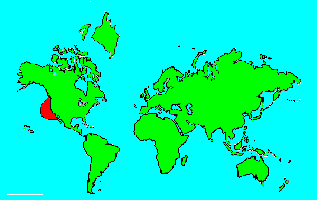
Pacific Geoduck (Panopea generosa) is found in mudflats along the western coast of North America from Alaska to Baja California. This giant clam can burrow to over three feet and is quite hard to pull out of its hole because the shell is larger than the entrance. This large animal can weigh up to 12 pounds. The shell can be over 20 cm long. The large tubes (giant siphons) that reach up to the surface cannot be retracted into the shell. The unusual name is probably derived from an American Indian word relating to the digging required to obtain this animal for eating.Bivalves and Clams (Class Bivalvia) are found in both fresh and salt water. Several different methods of classification have been proposed for dividing this class into orders and families. The Field Guide to Seashells of the World by Gert Lindner is a good summary of the various taxonomic systems. Bivalves typically strain water for micro-organisms.
Mollusks (Phylum Mollusca) are a large and varied group of animals. Some species are found on land; others are found in freshwater; many are found in the oceans of the world. The most familiar mollusks have an external shell surrounding a soft body. Well-known examples of mollusks are snails and clams. The major classes are as follows:
Ablacophora: - - - Worm appearing
Polhyplacophora (Amphineura): - Chitons
Scaphopoda: - - - Tusk Shells
Gastropoda: - - - Gastropods
Bivalvia (Pelecypoda): - Clams, etcetera
Cephalopoda: - - - Octopus, Nautilus
Monoplacophora: - - - A recent discovery
Animal Kingdom contains numerous organisms that feed on other animals or plants. Included in the animal kingdom are the lower marine invertebrates such as sponges and corals, the jointed legged animals such as insects and spiders, and the backboned animals such as fish, amphibians, reptiles, birds, and mammals.