SPECIES INFO
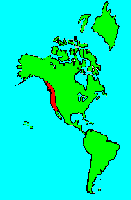
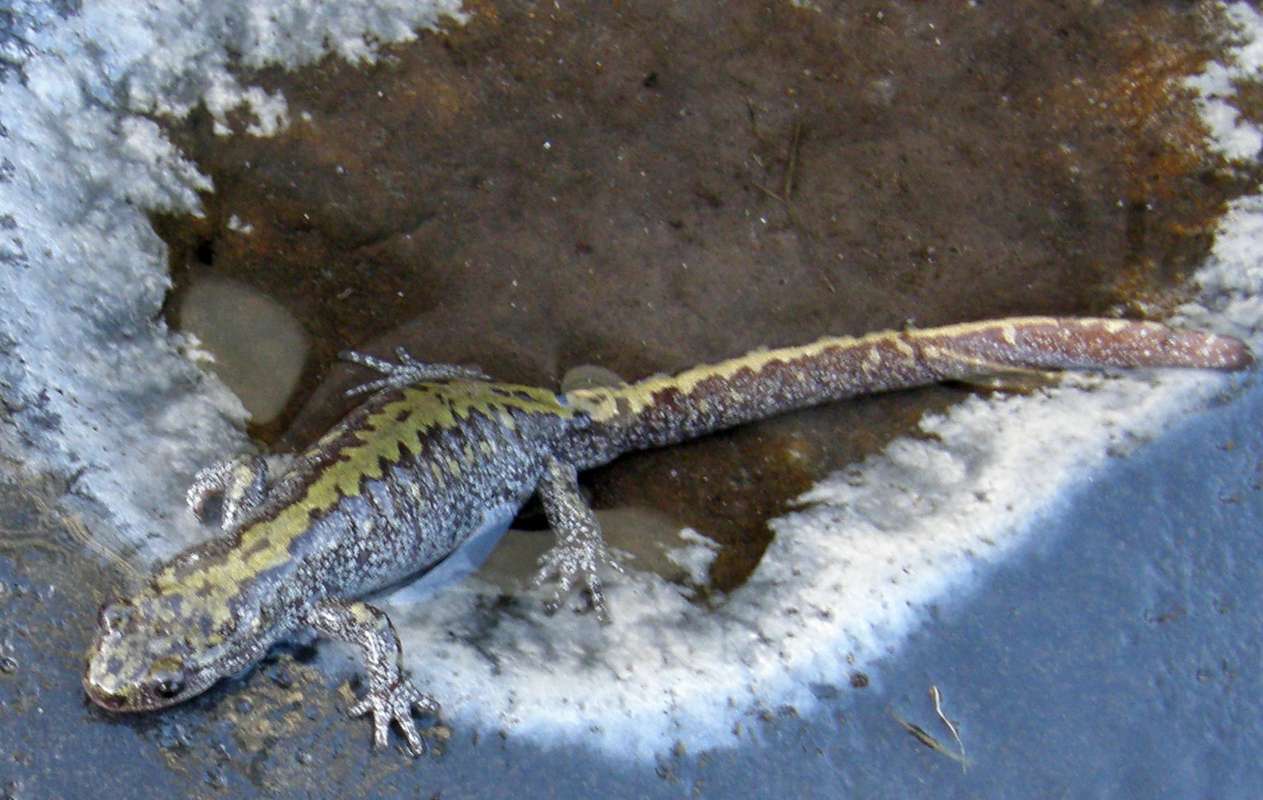
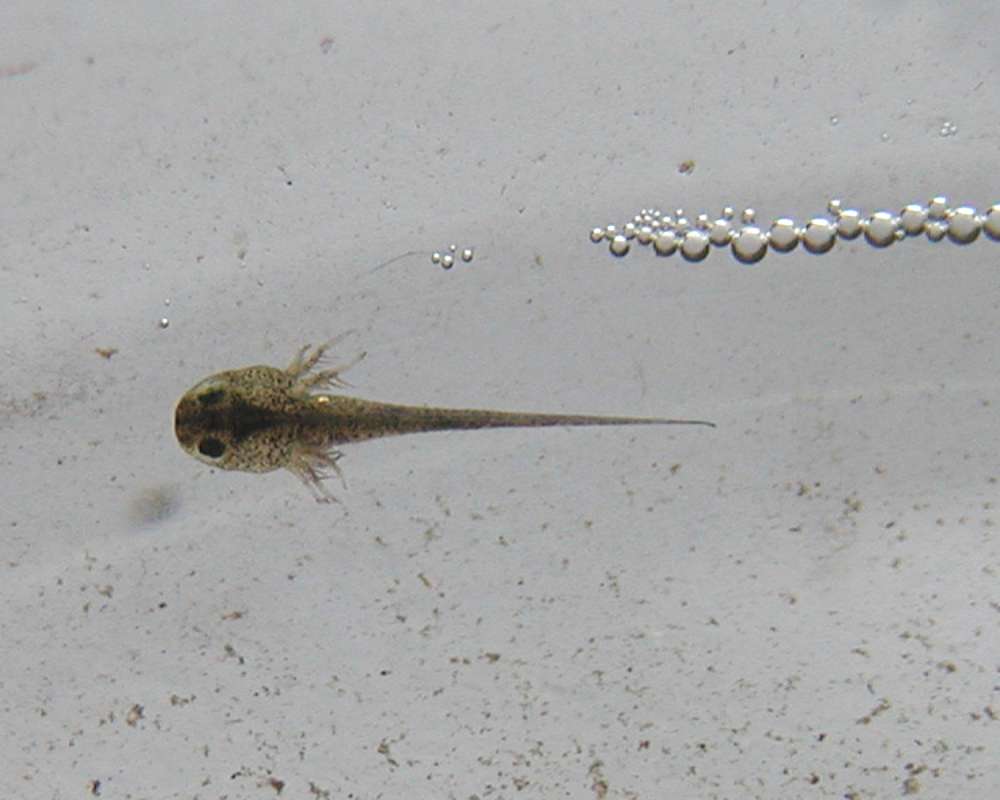
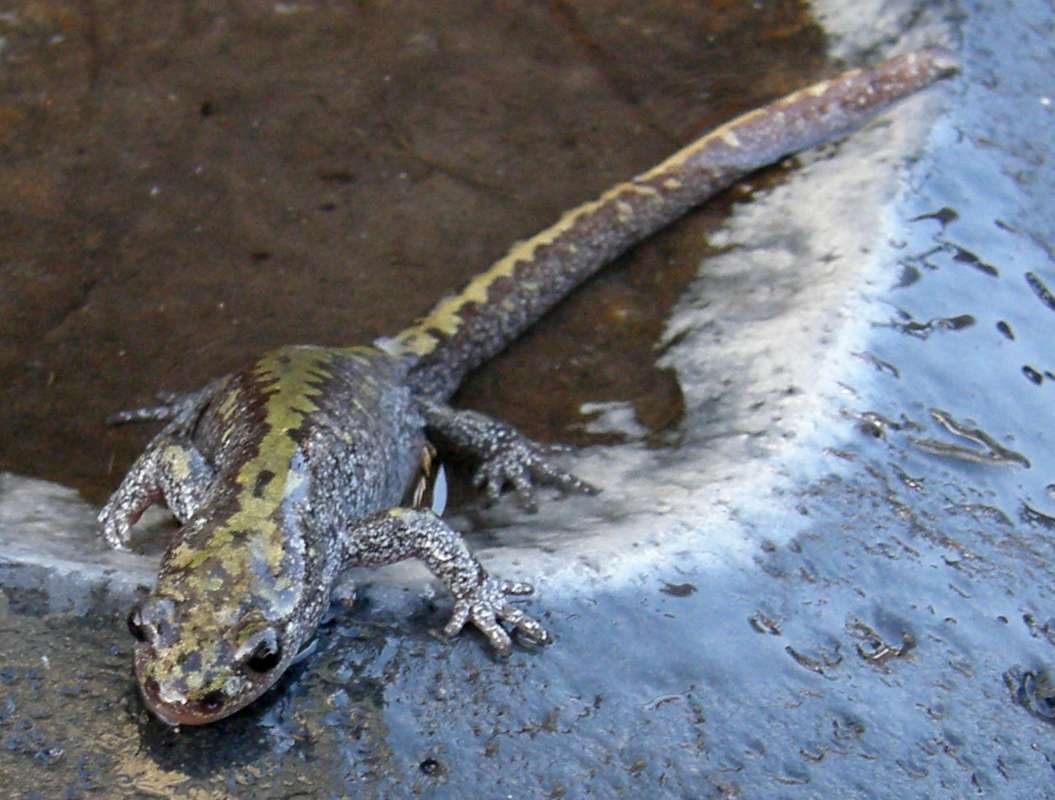
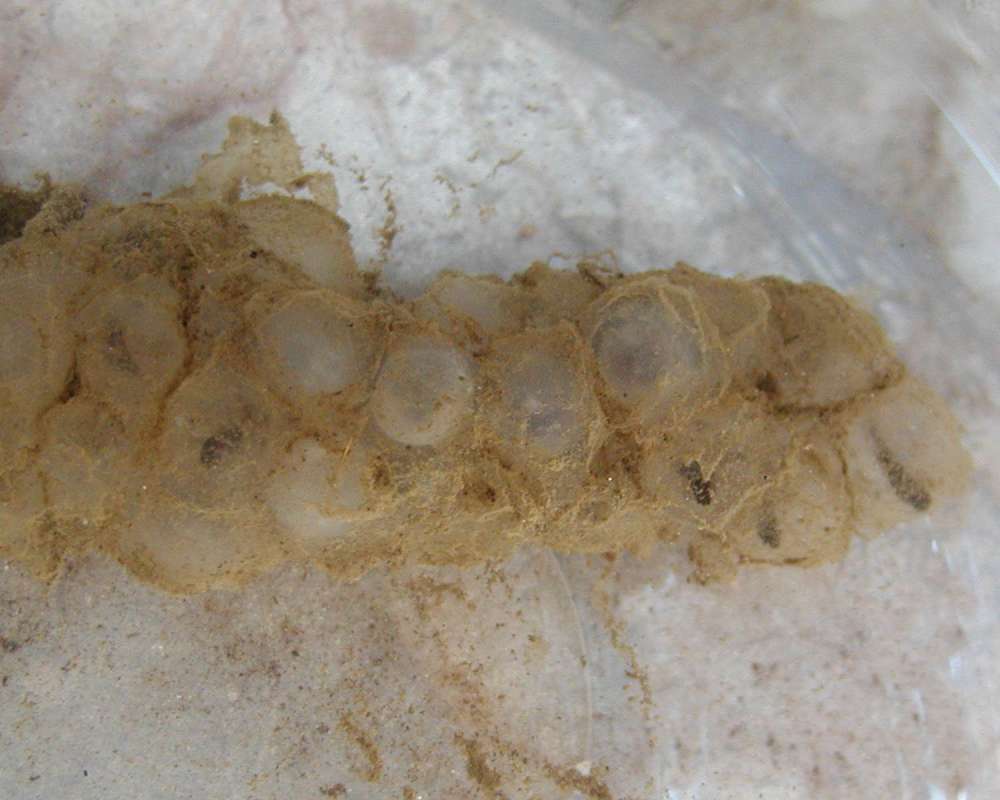
Long toed mole salamander (Ambystoma macrodactylum) is found from southern Alaska south into northeastern California and east into the Rocky Mountains. This is a smaller member of the genus with typical adults between two and three inches in length. This species is highly adaptable to sagebrush habitats, woods and meadows.Mole salamanders (Genus Ambystoma) are native to North America. The genus ranges from eastern Canada and southern Alaska south into central Mexico. There are approximately 30 species in this genus. These salamanders usually have a wide head and a flattened tail. These unusual amphibians spend most of their lives burrowing in the ground where they eat earth worms and other burrowing animals. In spring they migrate to ponds to mate and lay eggs. The eggs turn into larvae with gills that ultimately turn into adults with lungs. Since they are dependent upon water to breed and damp earth to burrow, they are mostly found in areas of high rainfall and high humidity. Some species in the genus never turn into adult forms and complete their life cycle with gills.
Amphibians (Class Amphibia) are best known as the frogs, toads, and salamanders. Amphibians begin their life as larvae that live in the water. Some species continue to evolve so that the final forms can breathe air. A typical example, is the Bullfrog of North America that begins life as a tadpole, and then finally turns into a adult frog. Amphibians usually have a soft, moist skin, and four legs adapted for walking or jumping or climbing. They have a three-chambered heart which gives them a fairly advanced circulatory system. There are probably about 2,500 species in this class.
Backboned Animals (Phylum Chordata) are the most advanced group of animals on earth. These animals are characterized by having a spinal cord or backbone. Most members have a clearly defined brain that controls the organism through a spinal cord. Fish, amphibians, reptiles, birds, and mammals are in this phylum.
Currently, some taxonomists believe that the fish should be divided into two groups (sharks and regular fishes) and that there are some other primitive groups in the phylum such as hagfish or lampreys.
Animal Kingdom contains numerous organisms that feed on other animals or plants. Included in the animal kingdom are the lower marine invertebrates such as sponges and corals, the jointed legged animals such as insects and spiders, and the backboned animals such as fish, amphibians, reptiles, birds, and mammals.