SPECIES INFO
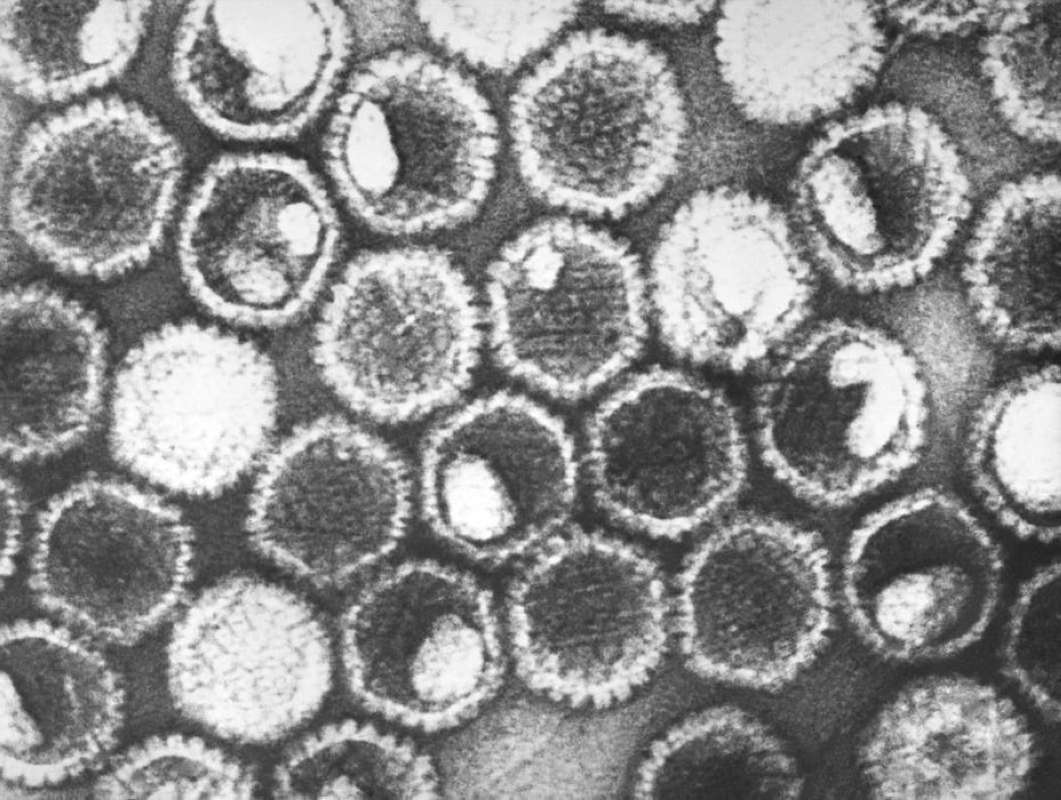
Herpesviridae (HSV-1 and HSV-2) are called Herpes simplex. This lifeform can survive in a human host for the hosts lifetime, and can break out at any time. There appear multiple generic names for this virus genus. Simplexvirus and Herpes are both used.This family contains viruses that cause herpes. The viruses that cause chickenpox and shingles are also in this family. These are usually enveloped and polyhedral.
Typical viruses include tiny organisms that contain both a nucleic acid and some proteins. Many of these cause serious illness in humans. Included herein is AIDS, yellow fever, Mumps, Measles, and Hepatitus. Estimates indicate that over 30,000 species are under study with only about 3,000 recognized.
e have lumped all the virus like lifeforms herein, as science is still working on the taxonomy tree in this area.
Viruses are the most primitive of lifeforms. These organisms are usually too small to be seen by typical microscopes. Viruses are composed of a acid nucleus and some proteins. These organisms need to invade a living cell of a host in order to grow and reproduce. Several well known diseases are caused by viruses including Hepatitis, HIV, Mumps, Influenze, Rabies, and Yellow Fever.
There are several even more primitive virus like creatures that include viroids and prions. (Viroids can cause some plant health issues, and Prions can cause the mad cow disease.)