SPECIES INFO
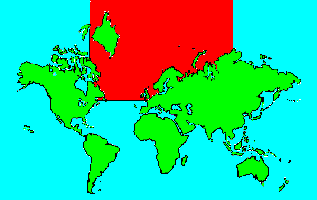
Atlantic Herring (Clupea harengus harengus) is found from North America to Europe in the North Atlantic. This herring is generally less than 12 inches in length. Previously this was the most common deep water fish in the Atlantic. In past years schools of this species were estimated to contain billions of examples. However, overfishing is having an impact on this species. We hope that this is not one of the species that depends upon a gigantic school to guarantee species survival. The common name nomenclature is confusing, as smaller examples of this and related species are called sardines.Herrings, sardines, or pilchards (Family Clupeidae) number about 180 species distributed among about 65 different genera. These fish are found worldwide. Most species are smaller kinds. These schooling fish can occur in gigantic quantities, and they serve both ocean predators and humans as an important food source.
The herring order (Clupeiformes) is found worldwide in marine environments. Several species are found in freshwater. The anchovies (Engraulidae), the wolf herrings (Chirocentridae), and the typical herrings (Clupeidae) belong here.
Bony fish, Class Teleostomi, are a class of chordates that include the majority of fish-like animals found on earth. They are characterized by a bony jaw and a bony skeleton. They are found in both fresh and marine waters.
Backboned Animals (Phylum Chordata) are the most advanced group of animals on earth. These animals are characterized by having a spinal cord or backbone. Most members have a clearly defined brain that controls the organism through a spinal cord. Fish, amphibians, reptiles, birds, and mammals are in this phylum.
Currently, some taxonomists believe that the fish should be divided into two groups (sharks and regular fishes) and that there are some other primitive groups in the phylum such as hagfish or lampreys.
Animal Kingdom contains numerous organisms that feed on other animals or plants. Included in the animal kingdom are the lower marine invertebrates such as sponges and corals, the jointed legged animals such as insects and spiders, and the backboned animals such as fish, amphibians, reptiles, birds, and mammals.