SPECIES INFO
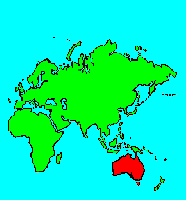
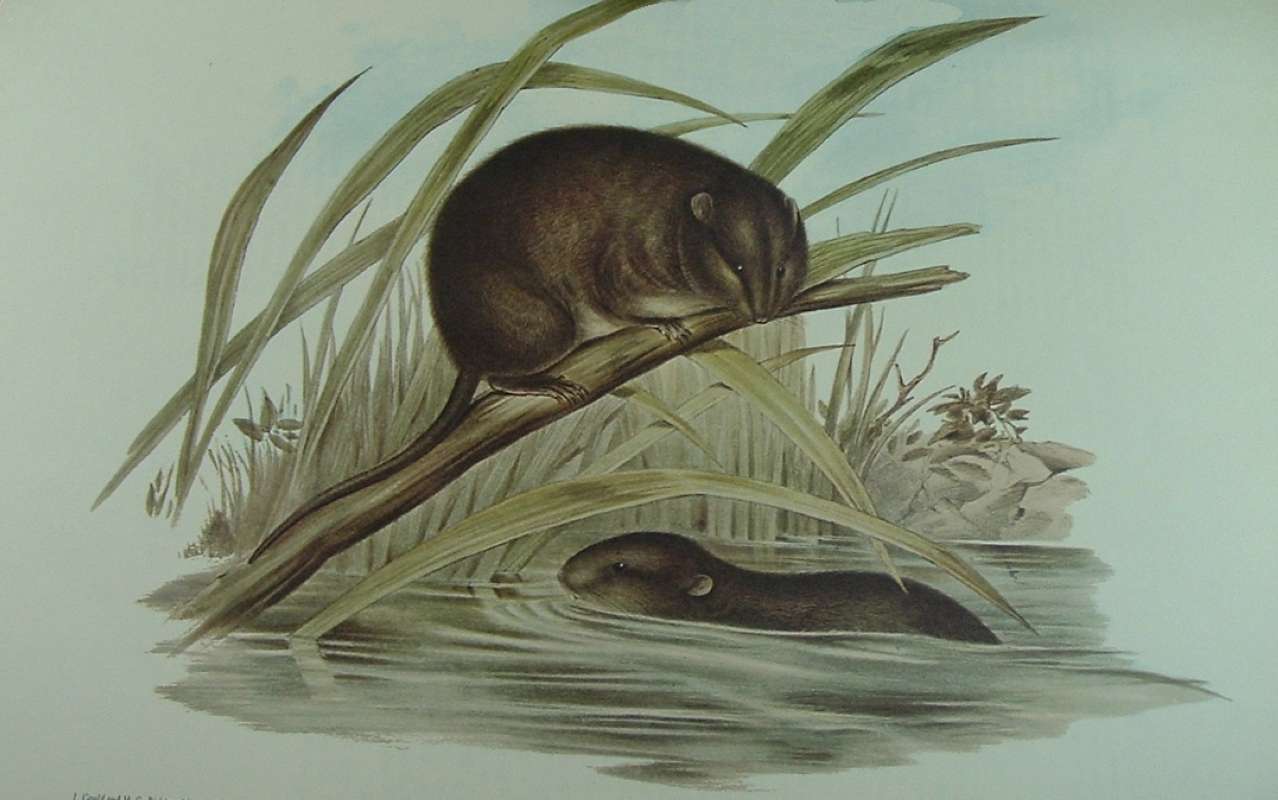
Hairy nosed wombat (Lasiorhinus krefftii) is a very local Australian species found in a few remaining locations in central and southern Queensland and also near the border of Victoria and New South Wales. In 1995 Johnson and Gordon noted in Mammals of Australia edited by Strahan that there was a stable population in the Epping Forest National Park. This park is in central Queensland.
This dark colored wombat can have a head and body length over 40 inches. Their broad nose and pointed ears will help identify these unusual animals. These wombats feed only on perennial native grasses in the immediate vicinity of one of their burrows. This species is endangered.The Wombat family (Vombatidae) is found only in Australia. This family contains three species of rabbit like animals that live in burrows. They look different from rabbits in that they have a wide almost pig like snout. There are three species in the genus. Two species are in the genus Lasiorhinus and one species is found in the genus Vombatus.
Wombat and Koala Family (Vombatidae), found in Australia, are regarded by some zoologists to be members of an isolated sub-family called Phalangeridae. Classification is yet to be resolved. There are three species of wombats. There is a single species of koala.
This large order of Australian and New Guinea region mammals was previously part of the marsupial group. However, these animals are so diverse and different they deserve their own order. This order contains 39 different genera and a total of about 143 species. The kangaroos, wallabies, koala and wombat all belong in this order.
We have used Wilson and Reeder, Mammal Species of the World, Third Edition, as a guide.
Mammals (Class Mammalia), together with the birds, are among the youngest of the classes of animals. In species count, mammals number about fifty-one hundred, trailing reptiles (approximately fifty-five hundred), fish (approximately eighteen thousand), and birds (approximately eighty-six hundred).
There are three sub-types of mammals:
monotremes, the most primitive:
Develop in reptilian-like eggs and suckle milk emerging
(i.e., spiny anteater, duckbilled platypus)
marsupials
Newborn emerges very underdeveloped and continue to
mature in a pouch on its mother's abdomen (i.e., opossums,
koala, kangaroo)
placental
Embryo develops within the uterus of the female and is
dependent on a placenta for nutrition and waste removal
(i.e., humans, lions, monkeys)
About sixty-five million years ago, the Tertiary era produced thirty-five orders of mammals. Of this number, eighteen have survived to represent Earth's most diversified as well as its most highly developed classification of animals.
Extinction of mammals is fast becoming a serious issue. Duff and Lawson present a list of forty-one extinct species that reached extinction prior to 1800. These forty-one species are not acknowledged in the counts of the various families. Duff and Lawson also present a list of forty-six species including three gazelles, one zebra, one seal, one deer, and one wolf that have probably gone extinct since 1800. These forty-six species are included in the family counts. Science is adding about forty to fifty new species a year to the list. Many of these are the result of divisions of prior species; some are recent discoveries.
Mammals owe their survival to adaptive capabilities that include the ability to exploit whatever sources of food are available to them, as well as their ability to adjust to various climes. Food specialization influenced evolution to such a great extent that the teeth structure can and has been used to provide extensive information on the food needs and various lifestyles of extinct species.
Despite the vast diversity among mammals in terms of size, habitats and adaptations, they share without exception many characteristics such as:
a. body hair
b. mammary glands
c. certain skull characteristics
d. four limbs that permit speed
e. parallel not perpendicular limbs
f. compartmentalized internal organs
g. a four-chambered heart and pulmonary circulation
Backboned Animals (Phylum Chordata) are the most advanced group of animals on earth. These animals are characterized by having a spinal cord or backbone. Most members have a clearly defined brain that controls the organism through a spinal cord. Fish, amphibians, reptiles, birds, and mammals are in this phylum.
Currently, some taxonomists believe that the fish should be divided into two groups (sharks and regular fishes) and that there are some other primitive groups in the phylum such as hagfish or lampreys.
Animal Kingdom contains numerous organisms that feed on other animals or plants. Included in the animal kingdom are the lower marine invertebrates such as sponges and corals, the jointed legged animals such as insects and spiders, and the backboned animals such as fish, amphibians, reptiles, birds, and mammals.