SPECIES INFO
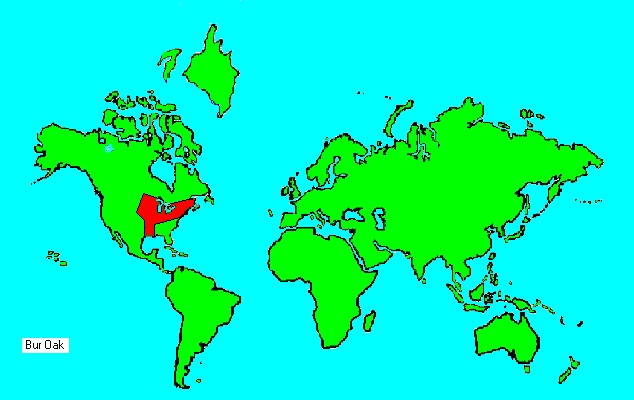
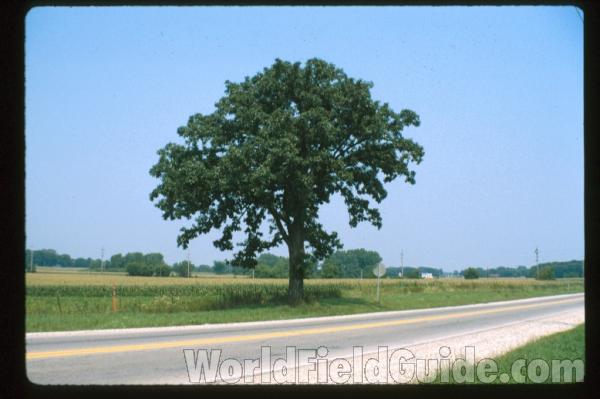
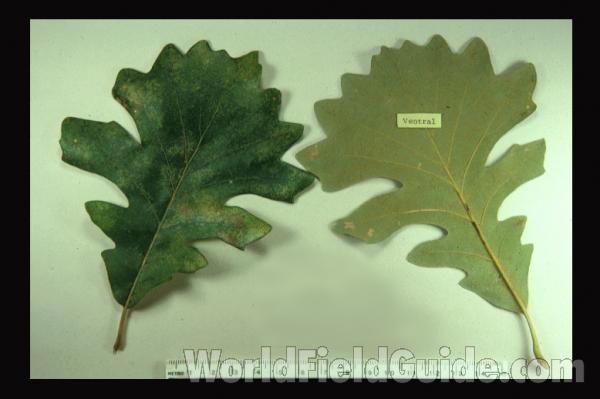
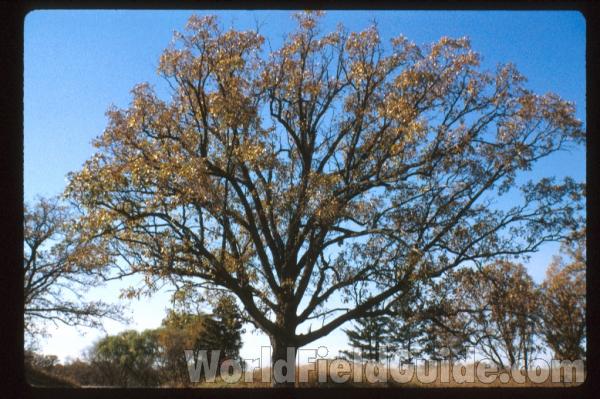
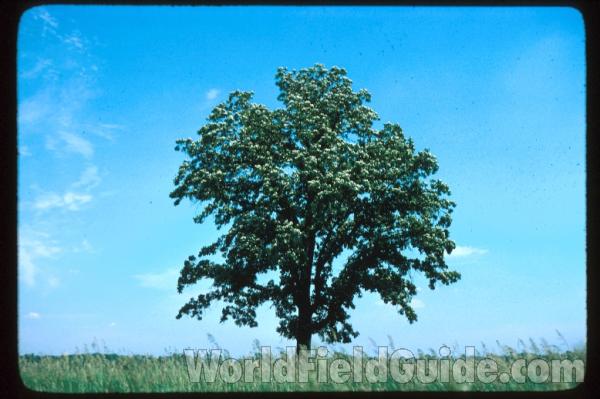
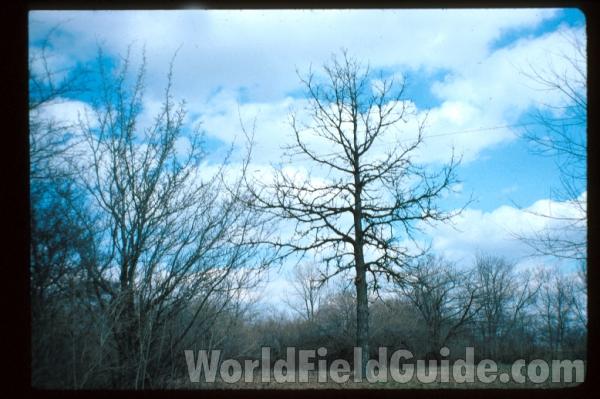
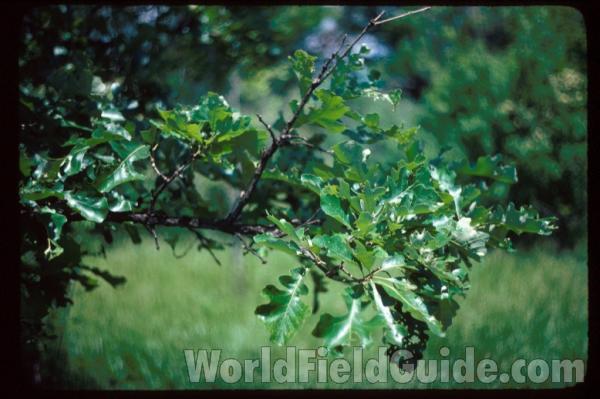
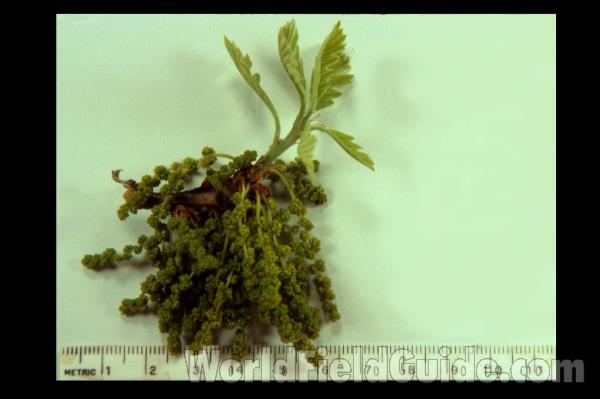
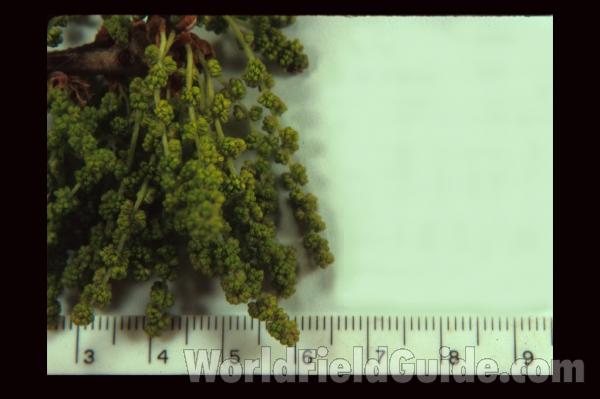
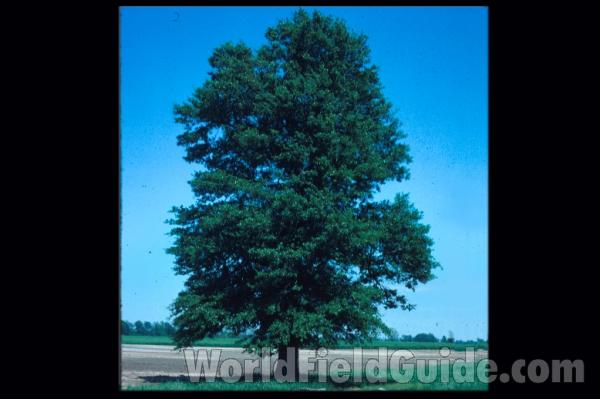
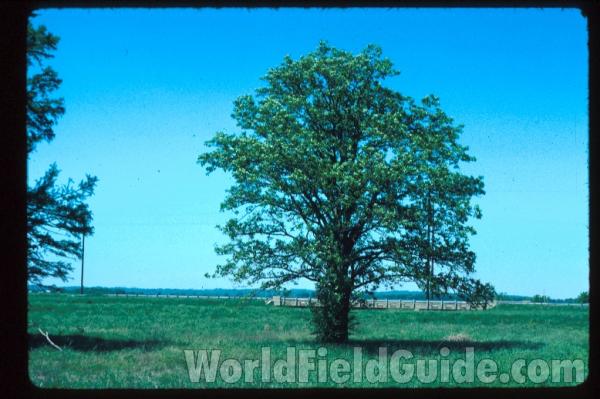
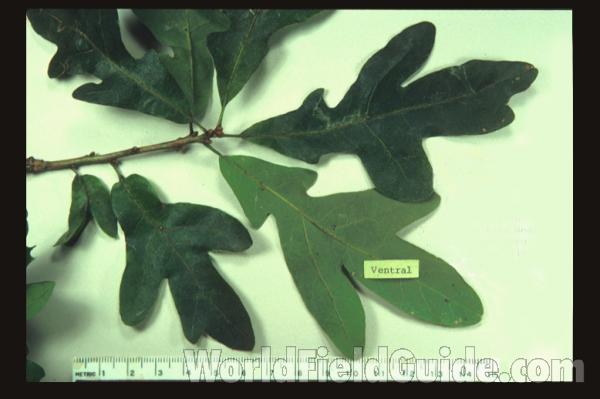
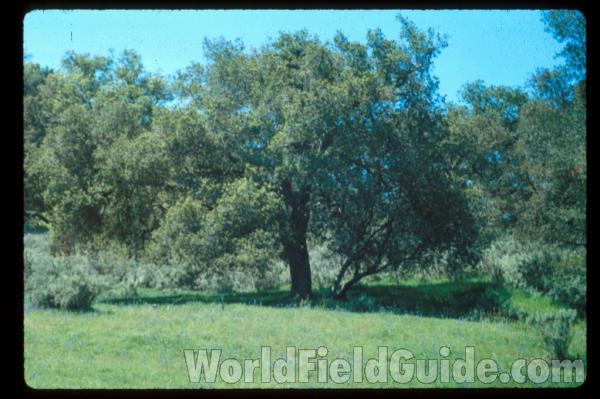
Bur Oak (Quercus macrocarpa) is found from the top to the bottom of the Mississippi River drainage system. This species is generally absent from New England, the area east of the Appalachian Mountains, and the southeastern United States. The Bur Oak is found from Pennsylvania to Louisiana to the Dakotas and into Canada. This immense tree usually attains a height of seventy-eighty feet but specimens over 170 feet have been known. This tree is usually found in bottomlands near water. It can be easily recognized from great distances during a windy day in the summer because the undersides of its leaves are lighter in color. The leaves are large (up to eleven inches) with very broad sinuses. It is a valuable hardwood.
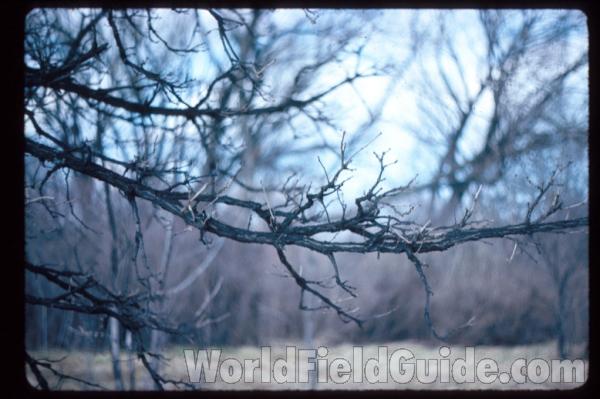
The Bur Oak and the White Oak are rather similar species. Frequently, the wood of the Bur Oak is sold in the market place along with White Oak. The White Oak tends to have straighter branches. Those of the Bur Oak tend to zigzag. Although this difference is not major, it has had a large impact on the populations of the two species. Because the straighter White Oak branches make good barn and house beams, it has been cut more frequently then the Bur Oak. In some farming regions in the northern part of the range of the two species, the White Oak almost could be considered a rare species.
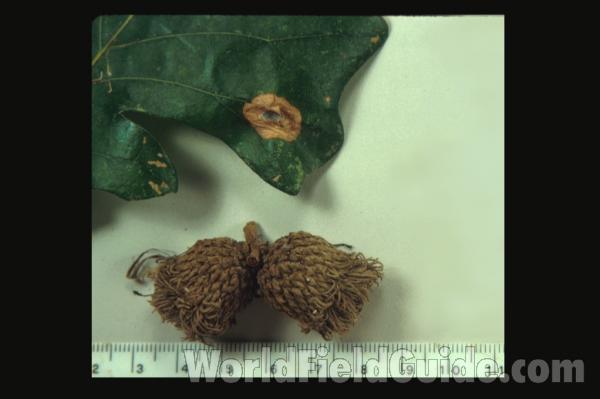
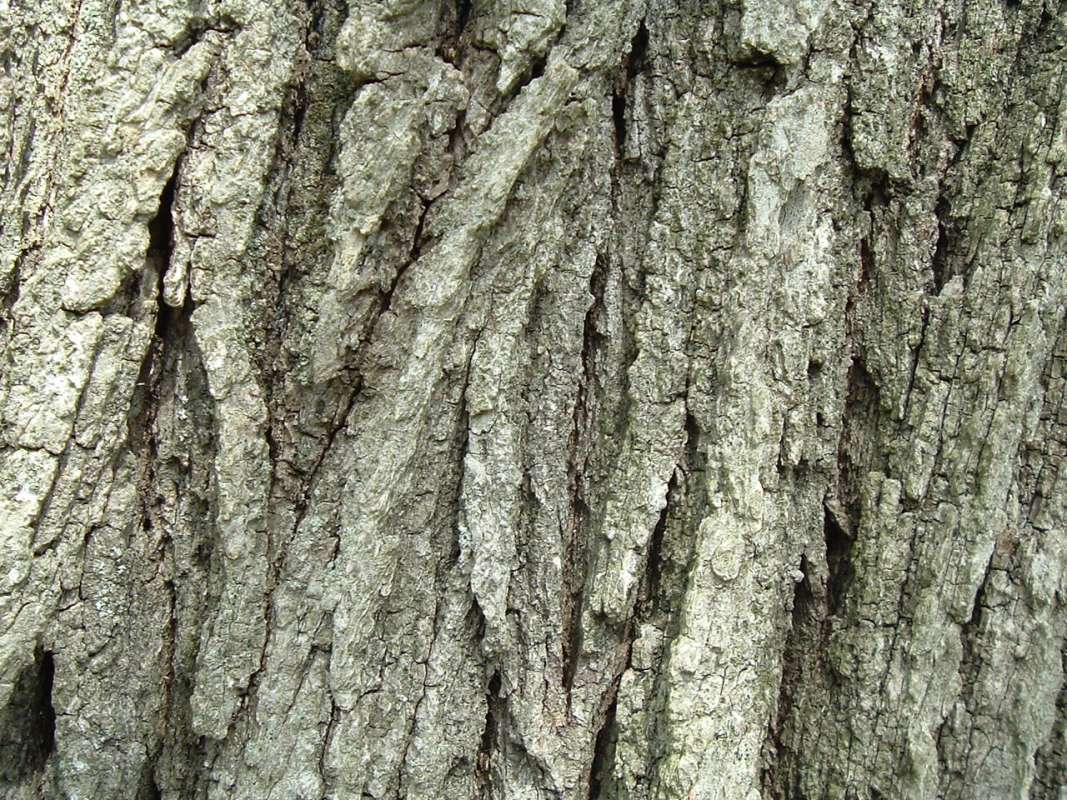
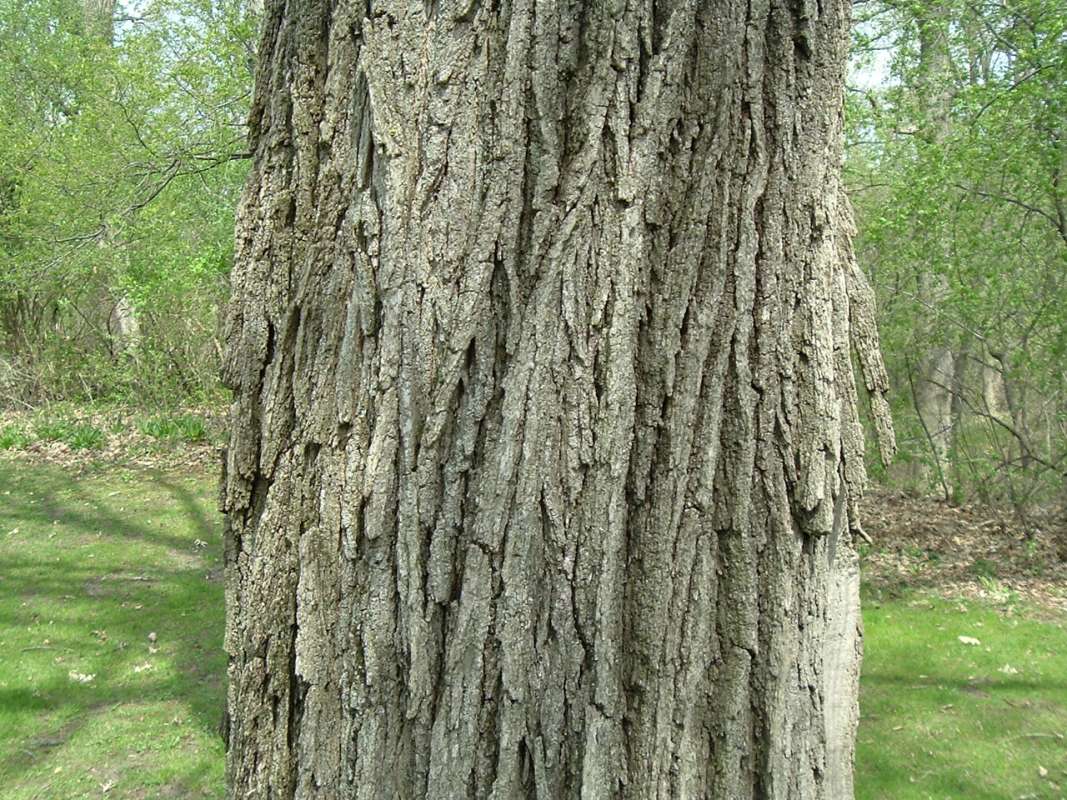
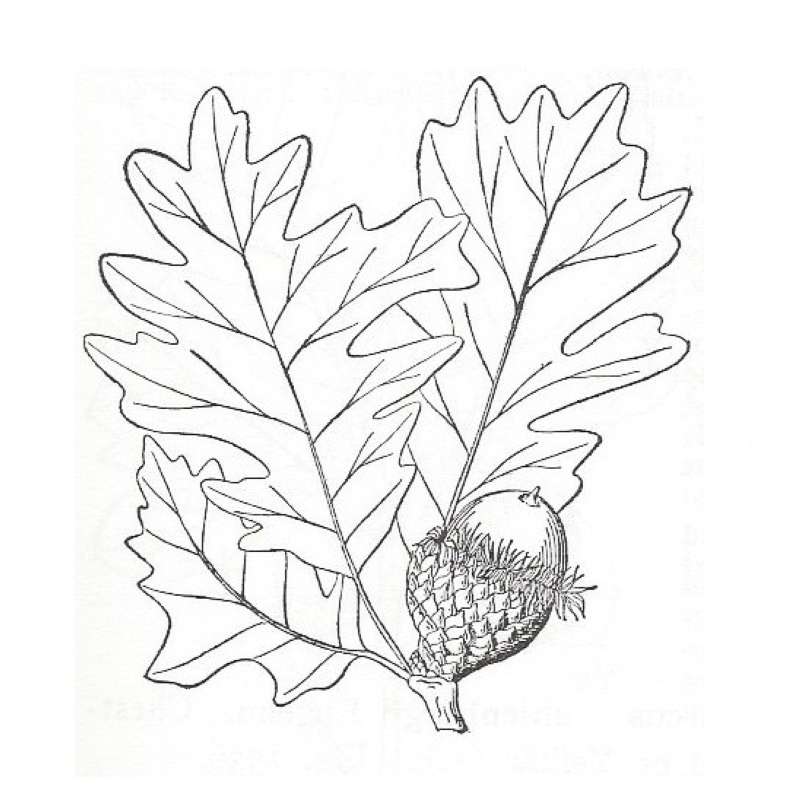
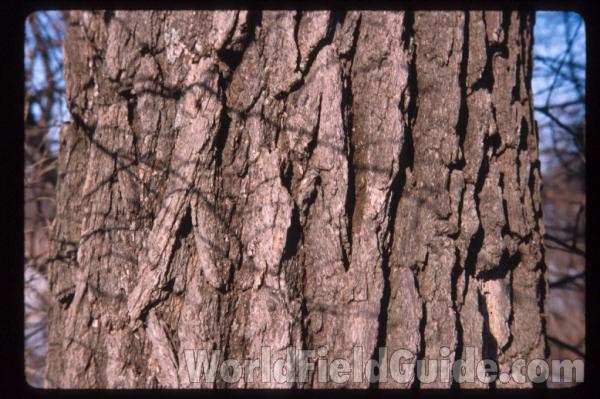
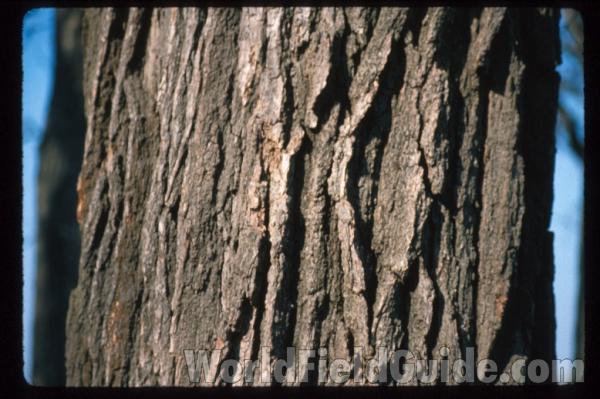
The Bur Oak (Quercus macrocapra), Overcup Oak (Quercus lyrata), and Post Oak (Quercus stellata) are closely related species that are also found in the eastern part of the United States. The White Oak can be quickly separated from the Bur Oak in that the White Oak bark is much lighter colored. Also, the acorn cap in the Bur Oak has numerous burs, and the Bur Oak cap typically covers about half of the acorn. The Post Oak does not occur in the north.
The Post Oak (Quercus stellata) is also a closely related species. However, this species tends to have numerous small straight branches that are useful for fence posts. Although some specimens have large trunks or limbs, most specimens contain numerous small branches. The Overcup Oak (Quercus lyrata) is another closely related species that is found in the eastern United States.
The following table will help separate the four widespread species in the White Oak group that are found in the eastern United States and have leaves with large rounded lobes and rounded spaces between the lobes. None of these species have small spines at the end of the lobes. The amount of the acorn that is covered by the acorn cap is a useful feature to sort out the identify of these four species, as is the maximum leaf size, and the total number of leaf lobes. (Quercus austrina, durandi, and margaretta are not included in this table because of their rare or local nature.)
White Oak - Bur Oak - Overcup Oak - Post Oak
Q. alba - Q. macrocarpa - Q. lyrata - Q. stellata
Maximum Leaf Size
9 inches - 12 inches - 10 inches - 6 inches
Acorn Cap Covers
10% - 50% - 80% - 30%
Number of Leaf Lobes
7-9 - 5-9 - 5-9 - 5
Quercus genus (Oak trees) is a well-known genus found in the northern hemisphere as well as in South America and northern Africa. Although there are about 300 to 600 species known worldwide, only about 65 of them are found in temperate North America. Kartesz lists 86 species, 98 hybrids, and 35 subspecies as being found in his greater North America, which includes the United States, Canada, Hawaii, Greenland, Puerto Rico and the U.S. Virgin Islands.
To facilitate study of this genus, many authors break it into halves, red oaks and white oaks. Typically, the red oaks have lobes in the leaves that end in spines, while the white oaks have lobes that are rounded. Although many of the red oaks have very pretty wood that is sometimes used for wood flooring, the white oaks are known for a hard wood that is useful for tool handles and furniture. Some of the species in the genus are evergreen, but most of the North American species shed their leaves in the fall. The fruit, commonly known as an acorn, consists of a detachable nut that is grown under an inverted cup.
We have taken the species list from the Miller book on oaks of North America, and created entries for those species for which we still lack images.
Oaks of the United States generally can be divided into two separate groups. The Red Oak group has leaves that have small spines at the end of the lobes. The species in the White Oak group do not have these small spines. Generally, the Red Oak woods are not as strong and durable as those in the White Oak group.
White Oak Group of species of the eastern United States. The White Oaks of the eastern United States can be divided into three separate groups. The first group contains those species with a regular oak leaf with lobes. The second group contains those species with elliptical leaves. The third group contains those species with elliptical leaves that have wavy edges.
White Oaks of eastern United States with regular lobed oak leaves:
Quercus alba - White Oak
Quercus austrina - Bluff Oak
Quercus bicolor - Swamp White Oak
Quercus duranda - Durand Oak
Quercus lyrata - Overcup Oak
Quercus macrocarpa - Bur Oak
Quercus robus - English Oak
Quercus stellata - Post Oak
White Oaks of eastern United States with elliptical shaped leaves:
Quercus chapmanii - Chapman White Oak
Quercus myrtifolia - Myrtle Oak
Quercus oglethorpensis - Oglethorpe Oak
Quercus virginiana - Live Oak
White Oaks of eastern United States with wavy edged leaves:
Quercus bicolor - Swamp White Oak
Quercus michauxii - Swamp Chestnut
Quercus muehlenbergii - Chinkapin Oak
Quercus prinoides - Dwarf Chinkapin
Quercus prinus - Chesnut Oak
Oak and Beech Family (Fagaceae) has about 600 species usually divided into about six different genera. The most common genus in North America is the Oak (Quercus) genus. This is a large and important genus that contains many valuable species of trees. To facilitate study of Quercus, the Oak and Beech Family have been divided into several different sections as follows:
Red Oaks of Eastern USA
White Oaks of Eastern USA
Oaks of West Texas
Oaks of SW USA (Arizona, New Mexico, Colorado, etc)
Oaks of Pacific Coast region (California, Oregon, etc.)
Hybrid Oaks.
Eurasian Species of Oaks
Non Oak Group - (N. American) - (Beeches, etc)
Eurasian Species of Non-Oaks and Chestnuts
Oak (Quercus) Miller and Lamb's book, Oaks of North America, published in l985, was used to develop a preliminary list of the oak (Quercus) species found in the United States. This list was modified by comparing it to A California Flora by Philip Munz and Arizona Flora by Kearney and Peebles. Recently, we have added species from Kartesz and Spellenberg.
Fagales Order is usually divided into two different families: the birches and the oaks.
Dicots (Dicotyledoneae Class) are the predominant group of vascular plants on earth. With the exception of the grasses (Monocots) and the Conifers (Gymnosperms), most of the larger plants that one encounters are Dicots. Dicots are characterized by having a seed with two outer shell coverings.
Some of the more primitive Dicots are the typical hardwood trees (oaks, birches, hickories, etc). The more advanced Dicots include many of the Composite (Aster) Family flowers like the Dandelion, Aster, Thistles, and Sunflowers. Although many Monocots reach a very high degree of specialization, most botanists feel that the Dicots represent the most advanced group of plants.
Seed plants (Phylum Embryophyta) are generally grouped into one large phylum containing three major classes: the Gymnosperms, the Monocots, and the Dicots. (Some scientists separate the Gymnosperms into a separate phylum and refer to the remaining plants as flowering plants or Angiospermae.)
For North American counts of the number of species in each genus and family, the primary reference has been John T. Kartesz, author of A Synonymized Checklist of the Vascular Flora of the United States, Canada, and Greenland (1994). The geographical scope of his lists include, as part of greater North America, Hawaii, Alaska, Greenland, Puerto Rico, and the Virgin Islands.
Kartesz lists 21,757 species of vascular plants comprising the ferns, gymnosperms and flowering plants as being found in greater North America (including Alaska, Hawaii, Greenland, Puerto Rico and the Virgin Islands.
There are estimates within the scientific world that about half of the listed North American seed plants were originally native with the balance being comprised of Eurasian and tropical plants that have become established.
Plant kingdom contains a large variety of different organisms including mosses, ferns, and seed plants. Most plants manufacture their energy from sunlight and water. Identification of many species is difficult in that most individual plants have characteristics that have variables based on soil moisture, soil chemistry, and sunlight.
Because of the difficulty in learning and identifying different plant groups, specialists have emerged that study only a limited group of plants. These specialists revise the taxonomy and give us detailed descriptions and ranges of the various species. Their results are published in technical journals and written with highly specialized words that apply to a specific group.
On the other hand, there are the nature publishers. These people and companies undertake the challenging task of trying to provide easy to use pictures and descriptions to identify those species.