SPECIES INFO
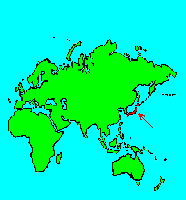
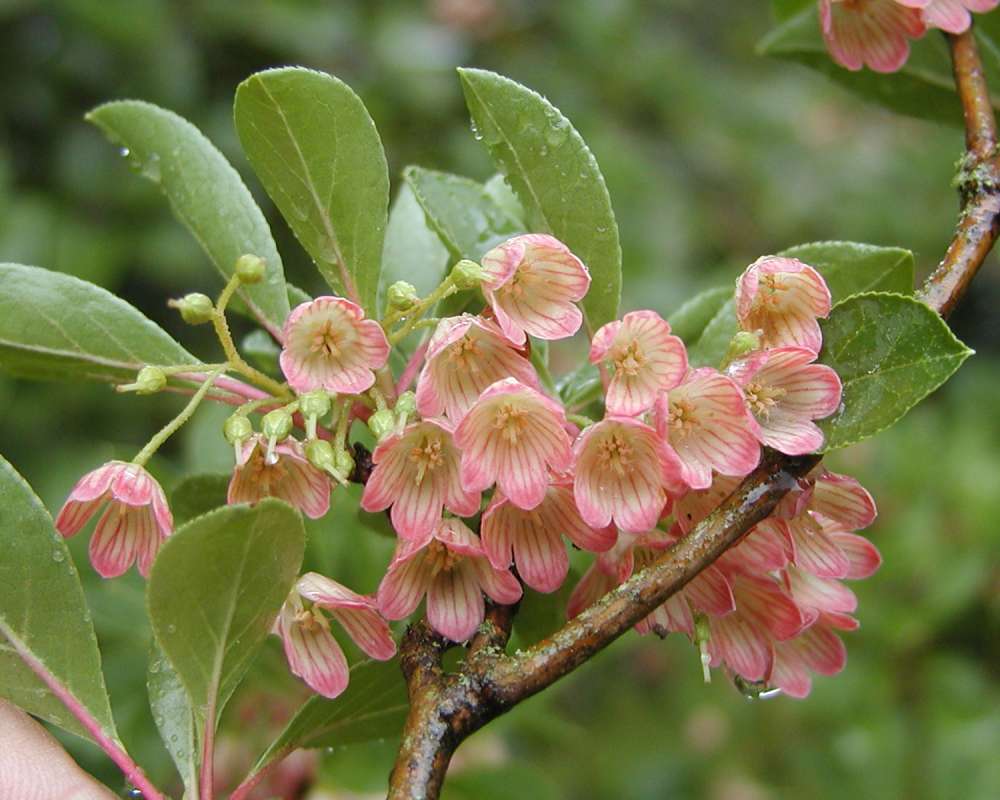
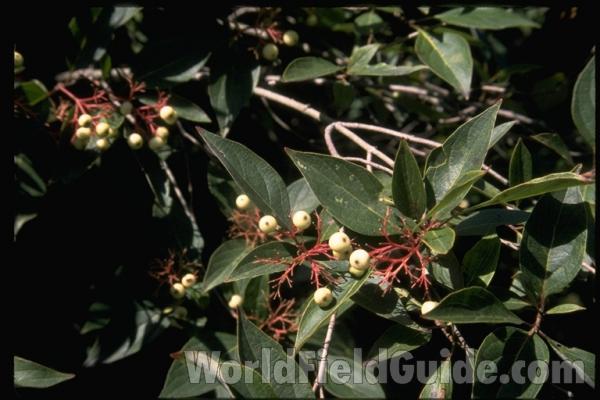
Enkianthus campanulatus is native to Japan. There are several named varieties for this species. This is a deciduous shrub that can grow to 15 feet tall. The obovate (broadest above the middle) toothed leaves can be up to three inches long. The leaves turn red in the fall.Enkianthus genus is native to the Orient. These shrubs can be found from Japan west through China to the Himalayan Mountains. There are ten shrubs in this genus. These shrubs have simple leaves that are toothed in some species. The flowers are in drooping terminal umbels or racemes.
Heath Family (Ericacea) is a large family of perennial herbs, shrubs, and trees with over three thousand species with very wide distribution. There are 192 species placed into 33 genera in this family currently living in greater North America.
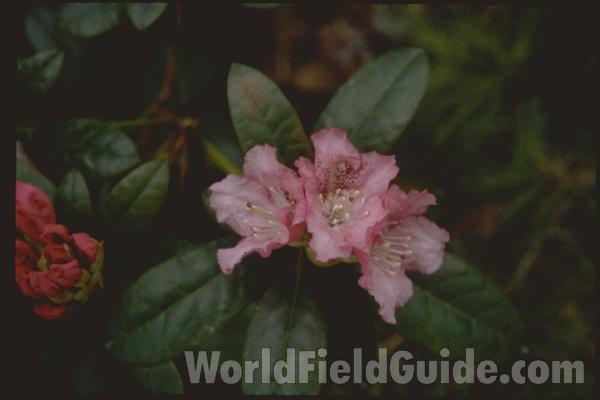
The cranberries, blueberries, heathers, Azaleas (rhododendrons), and heaths belong here.
Ericales Order is usually divided into four families. Flowers are usually 5 parted or in multiples of 5.
Dicots (Dicotyledoneae Class) are the predominant group of vascular plants on earth. With the exception of the grasses (Monocots) and the Conifers (Gymnosperms), most of the larger plants that one encounters are Dicots. Dicots are characterized by having a seed with two outer shell coverings.
Some of the more primitive Dicots are the typical hardwood trees (oaks, birches, hickories, etc). The more advanced Dicots include many of the Composite (Aster) Family flowers like the Dandelion, Aster, Thistles, and Sunflowers. Although many Monocots reach a very high degree of specialization, most botanists feel that the Dicots represent the most advanced group of plants.
Seed plants (Phylum Embryophyta) are generally grouped into one large phylum containing three major classes: the Gymnosperms, the Monocots, and the Dicots. (Some scientists separate the Gymnosperms into a separate phylum and refer to the remaining plants as flowering plants or Angiospermae.)
For North American counts of the number of species in each genus and family, the primary reference has been John T. Kartesz, author of A Synonymized Checklist of the Vascular Flora of the United States, Canada, and Greenland (1994). The geographical scope of his lists include, as part of greater North America, Hawaii, Alaska, Greenland, Puerto Rico, and the Virgin Islands.
Kartesz lists 21,757 species of vascular plants comprising the ferns, gymnosperms and flowering plants as being found in greater North America (including Alaska, Hawaii, Greenland, Puerto Rico and the Virgin Islands.
There are estimates within the scientific world that about half of the listed North American seed plants were originally native with the balance being comprised of Eurasian and tropical plants that have become established.
Plant kingdom contains a large variety of different organisms including mosses, ferns, and seed plants. Most plants manufacture their energy from sunlight and water. Identification of many species is difficult in that most individual plants have characteristics that have variables based on soil moisture, soil chemistry, and sunlight.
Because of the difficulty in learning and identifying different plant groups, specialists have emerged that study only a limited group of plants. These specialists revise the taxonomy and give us detailed descriptions and ranges of the various species. Their results are published in technical journals and written with highly specialized words that apply to a specific group.
On the other hand, there are the nature publishers. These people and companies undertake the challenging task of trying to provide easy to use pictures and descriptions to identify those species.